
CHECK 01
Describe the normal passenger and luggage task
List the people who travel together and the items carried on a normal journey. Include the external dimensions of rigid cases, wheels and handles, and the pushchair’s usual folded state. State whether the rear seats must remain available. A large space shown with a changed seating arrangement may answer a different question from the customer’s everyday family requirement.
The cabin and passenger-use guide places that luggage task alongside access and comfort. Ask sellers to use the same normal configuration when comparing candidates. If a demonstration removes a part from a pushchair or leaves out an ordinary bag, record the change and check whether the buyer would accept it routinely. Practical fit should describe the intended use, not an exceptional packing photograph.
CHECK 02
Keep the manufacturer volume in its stated context
The 1,271-litre headline is model-presentation information, not an explanation of every seat and measurement condition. Request the applicable specification and ask which configuration the number describes. Do not advertise it as ordinary luggage capacity with all required passengers aboard unless appropriate information actually establishes that claim for the selected car.
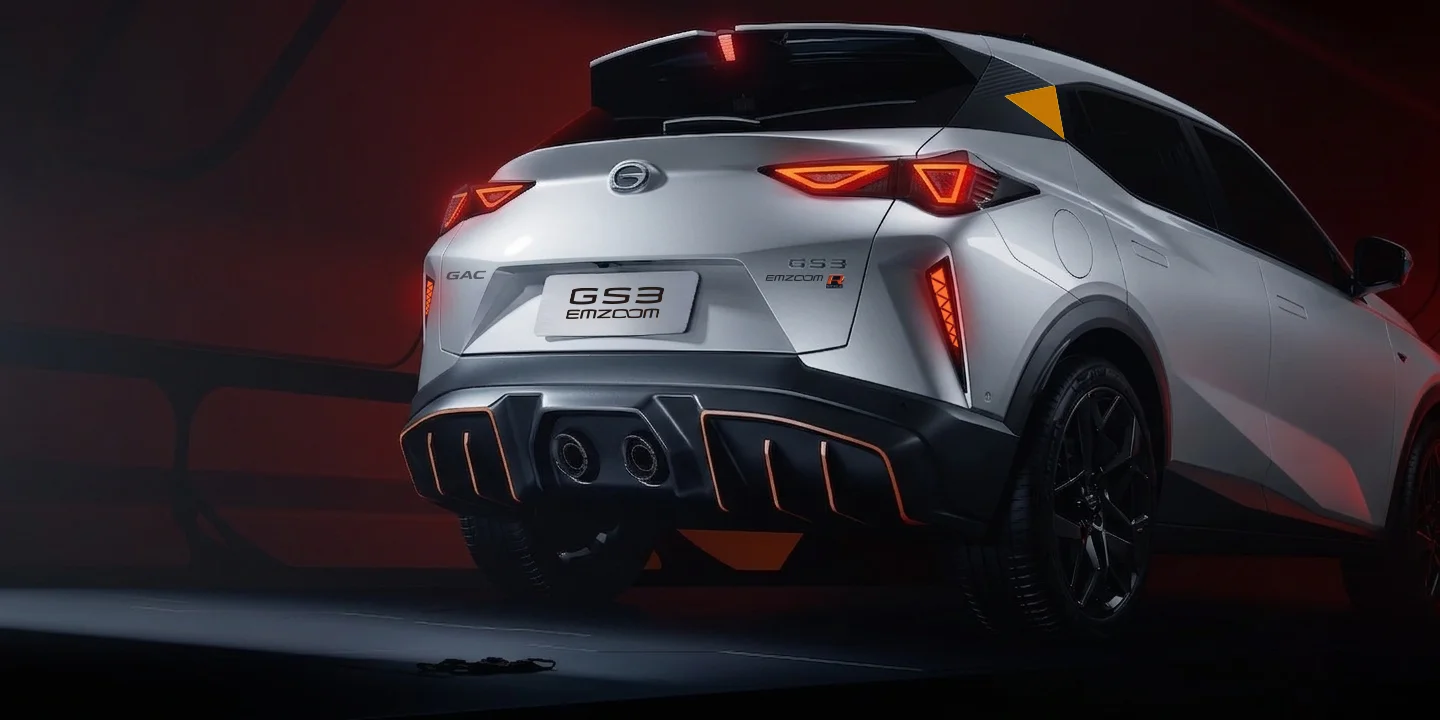
Identify the source market and production period through the GS3 naming guide. A Malaysia-market EMZOOM image does not certify a China-market Yingsu specification, and an earlier GS3 needs its own details. Keep the vehicle and reference context together when using any numerical comparison, rather than assuming a shared model-family name means every compartment and fitted item is identical.
CHECK 03
Measure the opening and useful load area
Ask for clear opening width and height, usable depth and any narrow or irregular area that matters to the proposed item. Show the measurement points in photographs. A wide-angle image can make the space look generous while concealing a restriction at the opening or near the floor. Keep floor and seat positions attached to the measurements.
If the actual item can be tested, document how it passes through the opening and where it sits, without forcing the tailgate against it. If only dimensions are available, mark the result as a provisional fit assessment. A simple geometric comparison is not the manufacturer’s volume method or proof that every object with the same nominal size can be loaded in the same way.
CHECK 04
Confirm the fitted seats and supplied storage pieces
Demonstrate the relevant normal folding or adjustment functions under the vehicle’s instructions. Ask which floor parts, covers, mats and accessories are included. For used stock, identify missing, damaged or replaced pieces before preparation. An optional accessory or seller-added item should remain visible rather than being merged into a universal standard-equipment description.
The equipment review keeps those details with the offered version. Cargo volume does not establish a payload rating or permission for every loading position. Use the actual vehicle guidance for load and securing requirements, especially if objects extend into the cabin. Passing a physical fit check cannot close those separate questions or guarantee a permitted arrangement for every family load.
CHECK 05
Inspect condition and ordinary loading access
Review visible lining, floor, seals, trim and tailgate operation on the candidate. For a used vehicle, record staining, damage or disclosed dampness concerns before cosmetic work. A new mat or clean photograph does not explain the cause of an earlier issue. Appropriate findings should enter the vehicle inspection rather than being answered only by a successful luggage demonstration.
Include the customer’s parking and loading location where it affects access. A case fitting inside can still be inconvenient to handle with little rear or overhead clearance. Record the normal opening and retrieval task with the intended passengers considered. The purpose is to make the customer’s daily use understandable without promising that one arrangement works in every garage or family situation.
The regular rear-adult decision keeps needed rear places occupied and records unrepresented loading or retrieval questions. The ordinary garage-use decision keeps location clearance separate from bags that already fit inside the selected boot.
CHECK 06
Compare GS3 alternatives on the same task
Give sellers the same items, required seats and accepted accessory arrangement. Ask for comparable photographs and clearly label any changed configuration. If the buyer is considering a GS4, use the GS3 and GS4 review to compare actual requirements rather than assuming a larger model automatically solves every opening or access concern.
Retain the accepted packing result in the final offer and repeat relevant checks if a substitute version appears. New and used candidates can share the same luggage requirement while needing different condition evidence. A documented normal-use result gives the receiving dealer a useful answer about the particular car, with any remaining physical test explicit, instead of repeating a volume headline as an unconditional family-fit guarantee.
Relevant references: GAC China: GS3 Yingsu luggage headline. References describe their stated market or technology; verify the offered vehicle separately.
Make the next request specific.
Send the condition, accepted years and version, destination and quantity. Include the items that must be confirmed before you accept a candidate. A sourcing enquiry begins the discussion; availability and purchase terms require an actual offer.
Discuss a suitable GS3 →