
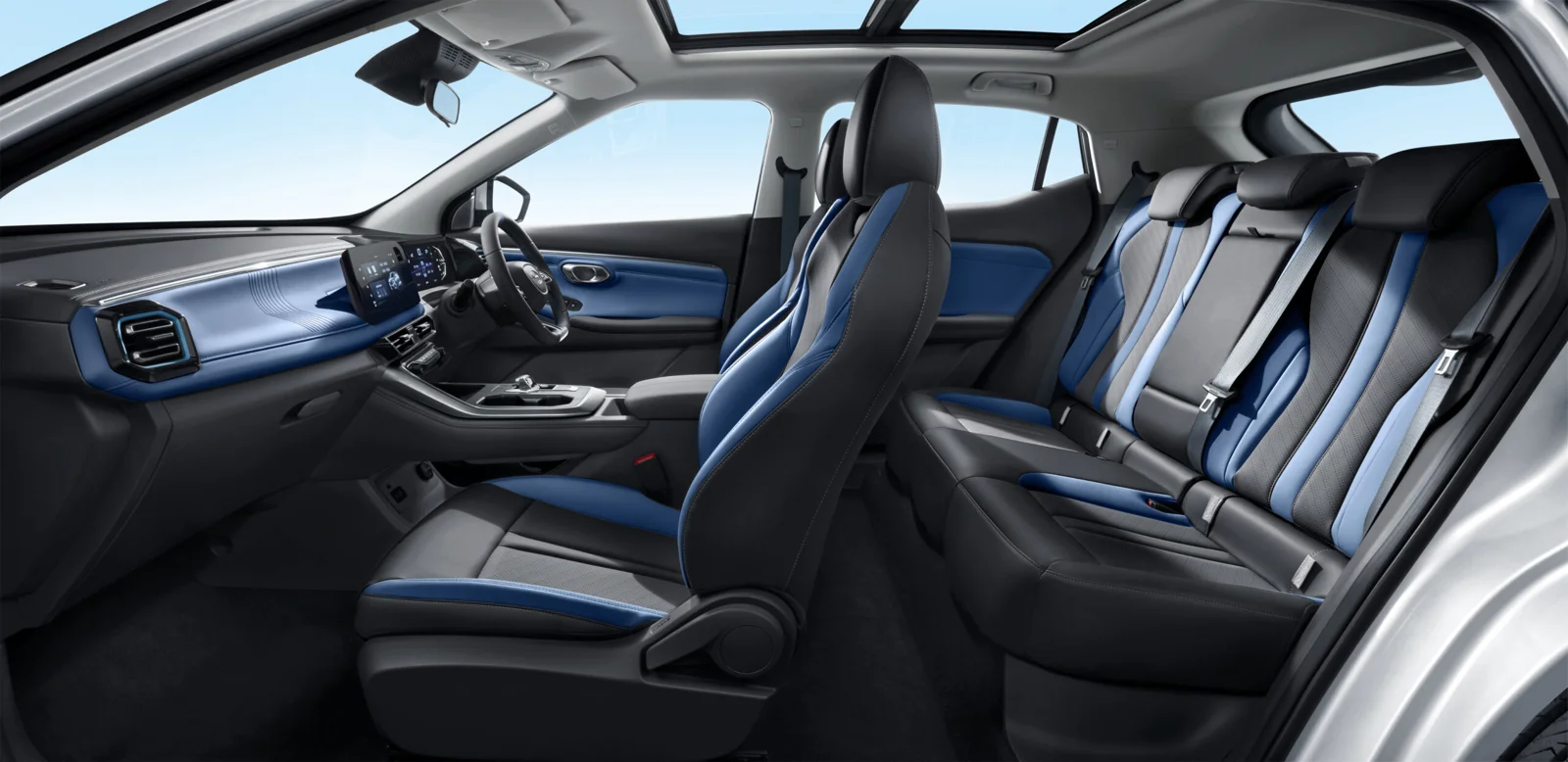
CHECK 01
Describe the actual rear users and trips
Write who regularly sits behind the front occupants, how often and which journey determines acceptance. The whole-cabin framework keeps simultaneous use visible. Occasional flexibility can be useful without proving a position suitable for every recurring adult journey, and a general roomy-car description should not replace the actual people and task within the dealer's sourcing brief.
Height alone cannot establish personal fit. Retain preferred position, normal access and the conditions represented in any assessment. If the intended users are absent, say what representative media can show and what remains untested. A promising candidate can stay under consideration without converting another person's favourable demonstration into unrestricted comfort approval for every adult who may use the vehicle.
CHECK 02
Fix the normal positions ahead
Set the front seats for their ordinary users and preserve those settings during the rear review. The driver-position decision matters where a front requirement constrains remaining room. Moving the driver forward only to improve rear photographs answers another task rather than establishing the simultaneous passenger arrangement the buyer actually expects to accept.
Use matching relevant setups across candidates and label which people were represented. Separate individually attractive views should not approve all users together when their seat positions conflict. Record the useful result actually achieved and the remaining personal limits instead of deciding from one persuasive clearance image, exterior size or a broad compact-family-SUV description that omits the normal driver's position.
CHECK 03
Assess entry and useful ordinary controls
The personal access review keeps entry, sitting and exit separate rather than inferring ease from the vehicle category. Use representative parking and the passenger's normal side where possible. A seated photograph can answer a position question while leaving the actual movement to reach or leave it unresolved, especially when another person performs the demonstration.
Identify the seat and cabin methods needed, with actual configuration and relevant ordinary response retained. More visible controls are not proof that every useful function works or remains available to the receiving user. Preserve setup and observation limits before the package earns value, and avoid promising sustained comfort or universal climate suitability from a short convenient demonstration made elsewhere.
CHECK 04
Keep bags and needed places together
The load review retains actual recurring items, opening and normal closure. Required places should remain occupied through the demonstration. A folded area can illustrate another useful task without approving this adult journey, while different baggage sets cannot establish equivalent usable space across two candidates merely because their photographs appear equally generous.
Ask which items need retrieval at a normal stop and what routine the buyer accepts. Keep any limiting load not represented as pending rather than assuming that general volume or an empty boot image supplies its result. Appropriate luggage restraint remains relevant; an attractive loosely arranged media display should not become proof of the full travelling setup or of an untested passenger-and-bag combination.
CHECK 05
Retain findings for the actual passenger area
The individual evidence guide separates appearance from relevant current findings and disclosed work. A tidy cushion or working adjustment cannot establish full passenger-equipment condition. Where a concern affects the customer's required method or confidence in the area, ask for appropriate assessment with scope and limits preserved instead of accepting a generic reassuring claim about every GS3.
The handover record should connect the accepted arrangement, relevant supplied items and completed preparation. A future remedy promise is not the assessed result, and an appealing price cannot establish personal suitability. The buyer can accept a limitation explicitly, but it should not disappear behind a higher package name or a general statement that the model is intended for family use.
CHECK 06
Rear space is shown under another driver's setting
Suppose regular adults need room that the media demonstrates only after changing the front user's normal position. Retain the observations and request one actual simultaneous task before approval. The car may serve a different journey, but individually favourable photographs cannot establish that the original occupied brief has already been met by the proposed configuration.
If the buyer accepts another routine, record the settings and limitations alongside the selected reference. The business assignment review provides another regular combined task where relevant. A substitute needs its own equipment, passenger and condition evidence rather than inheriting acceptance through similar dimensions, translated tier wording or a badge shared with the first reviewed car.
Choose the next action
| Finding or requirement | Purchase response |
|---|---|
| Front positions change between views | Assess one consistent occupied arrangement. |
| Only seated appearance is represented | Retain access and the actual personal question still unresolved. |
| Bags require a needed place to fold | Record an accepted changed task or the unmet original requirement. |
Questions buyers ask
Can rear-room reputation establish adult comfort?
No. Assess actual people, normal positions and the represented journey.
Can empty-cabin media approve simultaneous use?
No. Keep relevant occupants, settings and recurring bags together.
Model context: GS3 Yingsu in China and GS3 EMZOOM in Malaysia. Specifications and market programmes are not interchangeable; confirm the actual offered vehicle.
Make the next request specific.
Send the condition, accepted years and version, destination and quantity. Include the items that must be confirmed before you accept a candidate. A sourcing enquiry begins the discussion; availability and purchase terms require an actual offer.
Discuss a suitable GS3 →