
CHECK 01
Write the recurring longer journey
Identify normal users, required places and regular bags, with the limiting recurring trip clear. The occupied framework prevents a convenient solo demonstration from approving a fuller family assignment. An unusual exceptional load can matter when it is essential, but it should not silently replace the ordinary task used to compare the actual candidate offers.
Ask which position, function or stop routine determines acceptance. Personal comfort needs an appropriate assessment within represented conditions; a short clip cannot prove every occupant's sustained suitability. Keep untested questions explicit instead of promising a universal comfortable highway experience from a model name, exterior proportions or another person's favourable response in a selected media demonstration.
CHECK 02
Retain simultaneous passenger positions
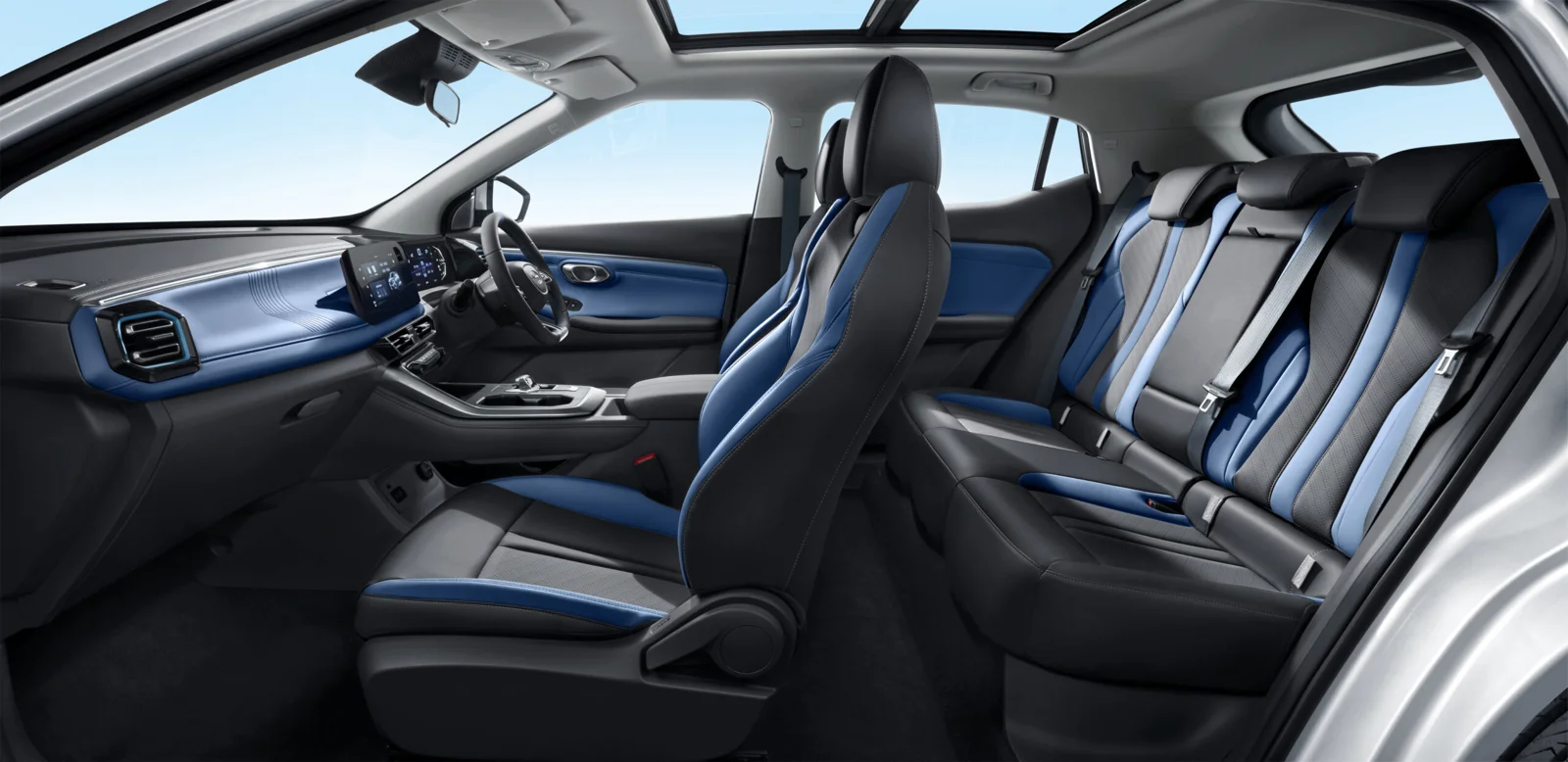
Set the front seats for their normal users and maintain them while required rear people are assessed. The driver-position decision matters where front needs constrain remaining room. Incompatible separately attractive photographs should not prove one complete occupied arrangement, even when the seat mechanisms operate normally in each of the different setups chosen for the demonstrations.
The adult rear review retains useful access, position and personal limits. Follow applicable seating and restraint instructions rather than treating a preferred showroom posture as permission for every travel setting. A convenient cabin function can contribute to the decision without supplying missing evidence about the actual users, another required place or comfort outside the short observation made remotely.
CHECK 03
Keep luggage and stop access practical
The load review assesses real cases, the opening and normal closure, with needed places occupied. A folded area may illustrate another useful task while leaving this journey unanswered. Preserve an awkward recurring item not represented instead of treating a published volume or another household's smaller bag photograph as proof of the customer's actual limiting load.
Ask which items are retrieved at an ordinary stop and how loading occurs in representative surroundings. Appropriate luggage restraint remains relevant; a loosely arranged display is not a complete travelling setup. If another routine is accepted, record the concession plainly rather than approving the original occupied task by silently borrowing room from an essential passenger place.
CHECK 04
Use relevant operating evidence
The running framework separates scheduled needs, current findings and labelled fuel assumptions. Apply observations appropriate to the identified car and ordinary journey. A city record or another driver's favourable long trip should not be presented as the receiving buyer's guaranteed result under different load, climate and use conditions, nor should unlike measurements establish a universal economy ranking.
The mechanical guide retains the actual installed combination and relevant support questions. A plausible calculation can remain useful with uncertainty labelled. It does not need an invented guaranteed distance or saving to help the dealer compare two real offers, and it should not certify vehicle condition or establish practical service availability at every location within the proposed travel route.
CHECK 05
Value useful methods and current findings
Demonstrate the phone, seat and assistance functions that matter under appropriate ordinary conditions, retaining setup and limits. The function review keeps supported methods and responsibilities separate from hardware appearance. A working aid is not complete journey approval, and a successful seller setup may leave the receiving customer's access question unresolved before the package earns continuing-use value.
The maintenance timeline connects completed work with relevant current evidence. Obtain appropriate provider answers about assessed needs and remedies rather than assuming a favourable record guarantees support everywhere the route passes. Keep promised preparation outside the accepted result until completion is supported, so an attractive travel story does not quietly approve unresolved system concerns or incomplete delivery scope.
CHECK 06
A recurring holiday load changes the task
Suppose the ordinary trip works with normal bags but a regular holiday adds a bulky case while all required places stay occupied. Assess that item in the same arrangement and review accepted alternatives. Folding an essential place is a changed journey rather than proof that the original passenger-and-load requirement has already been fulfilled by the candidate.
Retain the accepted setup, stops and operating assumptions with relevant limitations. The ordinary loading-location review addresses another practical constraint independently. A replacement car needs its own affected configuration and condition evidence rather than inheriting approval through similar fuel wording, a matching badge or an attractive higher-package presentation.
Choose the next action
| Finding or requirement | Purchase response |
|---|---|
| One favourable fuel figure dominates | Retain its conditions and the actual occupied customer routine. |
| A recurring load is unrepresented | Assess it or keep the requirement pending. |
| A useful aid is treated as full journey proof | Verify its supported method while retaining other practical and condition requirements. |
Questions buyers ask
Does highway reputation prove universal comfort?
No. Assess actual users, positions, loads and observation limits.
Can city records guarantee longer-road fuel results?
No. Keep relevant route, load and operating assumptions explicit.
Model context: GS3 Yingsu in China and GS3 EMZOOM in Malaysia. Specifications and market programmes are not interchangeable; confirm the actual offered vehicle.
Make the next request specific.
Send the condition, accepted years and version, destination and quantity. Include the items that must be confirmed before you accept a candidate. A sourcing enquiry begins the discussion; availability and purchase terms require an actual offer.
Discuss a suitable GS3 →